
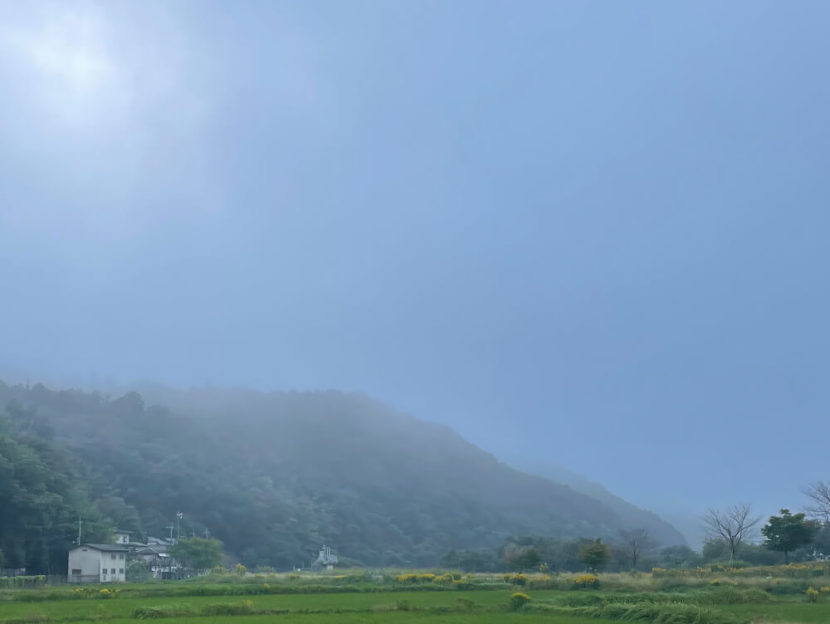
Kameoka is famous for its enchanting misty landscapes, drawing many tourists to experience its unique scenery. But why is mist so common in Kameoka? We’ll explore the reasons behind the frequent mist in Kameoka, the times and conditions it occurs, and how mist actually forms.
Why is Mist Frequent in Kameoka?
Kameoka is located in central Kyoto Prefecture, surrounded by mountains, forming a basin. This geographical feature is a key factor in why mist frequently appears. In basin areas, warm air accumulates during the day and cools quickly at night, causing cold air to settle in the valley. The rivers in Kameoka, especially the Katsura River, provide ample moisture, creating an environment ideal for mist formation.
Thanks to the presence of the Katsura River, the area is rich in humidity, which allows the air to reach saturation more easily, setting the stage for mist formation. This is especially common from autumn to winter when the temperature differences between day and night become more pronounced.
When Does Mist Appear Most Frequently?
In Kameoka, mist commonly appears from autumn to winter. During this period, nighttime temperatures drop sharply, while daytime temperatures remain relatively warm, creating a large temperature difference between day and night. This rapid temperature shift encourages the formation of mist.
Mist tends to be thickest early in the morning. At night, the ground-level air cools quickly, and water vapor from the river condenses into mist as it encounters the cold air. This is why the mist along Kameoka’s rivers and fields in the early morning creates a magical, photogenic landscape, attracting many photography enthusiasts.
How Does Mist Form?
Mist forms when water vapor in the air cools and turns into tiny water droplets, a process known as “condensation.” Warmer air can hold more moisture, but as it cools, it can no longer retain as much, causing the excess moisture to condense into droplets. Let’s take a closer look at this process of mist formation.
1. Cooling of the Air
For mist to form, the air must cool. During the day, air warms, but in the evening it cools down. In basins like Kameoka, cold air easily collects at lower levels, intensifying the cooling near the ground.
2. Saturation and Condensation
When the cooled air reaches a certain temperature, it becomes saturated, meaning it can no longer hold all its moisture. Excess water vapor turns into droplets, forming mist. In humid areas like riverbanks, this process occurs more easily, making mist more likely to form.
3. Radiation Fog and River Mist
The type of mist most commonly seen in Kameoka is known as “radiation fog” or “river mist.” Radiation fog forms when the ground cools rapidly at night, chilling the air close to the ground, while river mist arises from water vapor from the river cooling and condensing. In Kameoka, these two types of mist often combine, creating especially thick mist.
Mist as a Tourist Attraction
The mist in Kameoka is one of its most captivating natural features. On autumn or winter mornings, the mist-covered riverbanks and rural landscape give a mystical impression. On clear days, as the mist begins to clear, sunlight filters through, creating beautiful beams of light. For photographers, this is a perfect moment to capture.
For those wishing to enjoy Kameoka’s mist, some ideal spots include riverside areas and high vantage points around the city. From higher elevations, the entire Kameoka Basin may appear blanketed in mist, resembling a sea of clouds. This scenery evokes the timeless beauty of Japan’s natural landscapes and draws many tourists year-round.
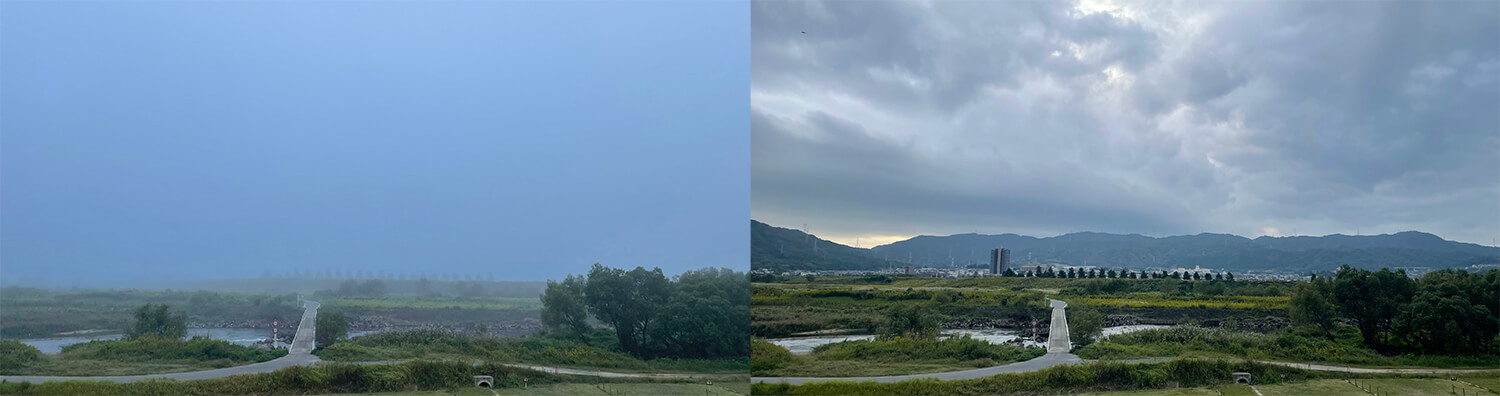
The frequent mist in Kameoka results from the basin’s geography, high humidity near the river, and temperature differences that intensify from autumn to winter. Mist forms through the physical processes of cooling, saturation, and condensation, and in Kameoka, a combination of radiation fog and river mist is often seen.
In this way, Kameoka’s enchanting misty scenery continues to attract visitors, offering a beautiful and mystical view that captivates all who experience it.
To view the early morning fog, please take advantage of Kiri no Kōbō, where you can stay overnight before your visit.
We look forward to welcoming you.